
Perched on the hills of Shiga, Kongōrin-ji is a discreet, almost hidden temple, but one with much to captivate. Founded in the 8th century, it has seen monks, lords, and conflicts come and go, never losing its calm.


An army of Jizō


Before even reaching the heart of the temple, you walk past a path guarded by hundreds of small Jizō statues. Draped in red caps and bibs, they watch over children and travellers. These Jizō often hold small plastic flowers that turn in the wind, like colourful little windmills (kaza-guruma). These wind flowers are not just decorative: they are offered by bereaved families to soothe the souls of lost children and to symbolise the lightness and ephemeral nature of life.
You feel as if these little sentinels greet you as you pass, a silent welcome committee filled with kindness.


The temple’s treasures


At the top, Kongōrin-ji reveals its treasures. Ancient statues (some classified as national treasures) keep watch in the dim light. Kannon Bosatsu, Amida Nyorai, Juichimen Kannon… The carved wood, patinated by time, has kept the fervour of past centuries.
All around, the temple’s architecture keeps its slightly weary elegance, like a grandfather who would have a lot to say if you knew how to listen.


They say Kongōrin-ji once served as a refuge for monks, a bit like a hideout perched in the hills. Between the ancient tiles and the carefully made sculptures, you can still feel that blend of peace and strength, a balance that gives the place its unique character.
Hydrangea season

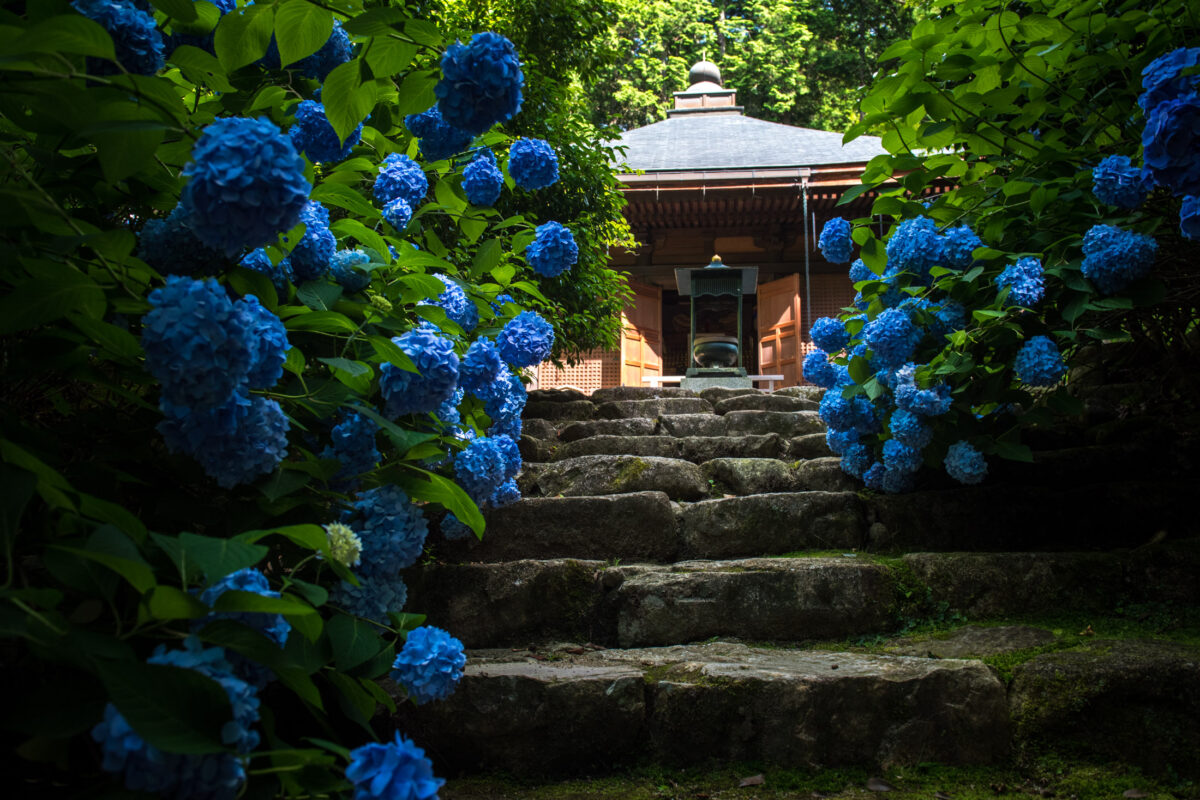
In June, Kongōrin-ji puts on its finest colours. Hydrangeas, from blue to purple, line the paths and turn the temple into a living painting.
These flowers, once associated with flighty love, are today a symbol of fragile beauty. And they give the temple an air of discreet, almost secret celebration.


A place to slow down
Kongōrin-ji is not a site where you come to race through. Here, you slow down, you let the silence wrap around you, and you stop to admire what you would have missed running.
The slightly uneven steps, the mossy lanterns, the statues that seem to whisper: everything invites you to take your time. And when you leave, you have the impression of having tucked a small piece of serenity into your pocket. No doubt about it, Kongōrin-ji has a talent for coaxing a smile from you, and making you forget your watch.


Nearby in Shiga, Omihachiman, between rituals and canals. And for another crowd of stone faces, Otagi Nenbutsu-ji in Kyoto.

 Instagram


