The village of Sotodomari is located in Ainan, just west of Shikoku island in Ehime prefecture. It’s known as the “Stone-Walled Village” (Ishigaki no Sato, 石垣の里). In 2007 it was selected as one of the “100 Most Beautiful Japanese Historical Landscapes”.

Sotodomari: Village of the Second Son
Sotodomari was built between the late Edo and early Meiji eras. At the time, the population of the adjacent village of Nakadomari was rapidly growing. Lacking space to accommodate everyone, the village chief proposed that the second (or youngest) son of each family move there. So a new village was created, and they named it Sotodomari (“Soto + Tomari” 外泊).


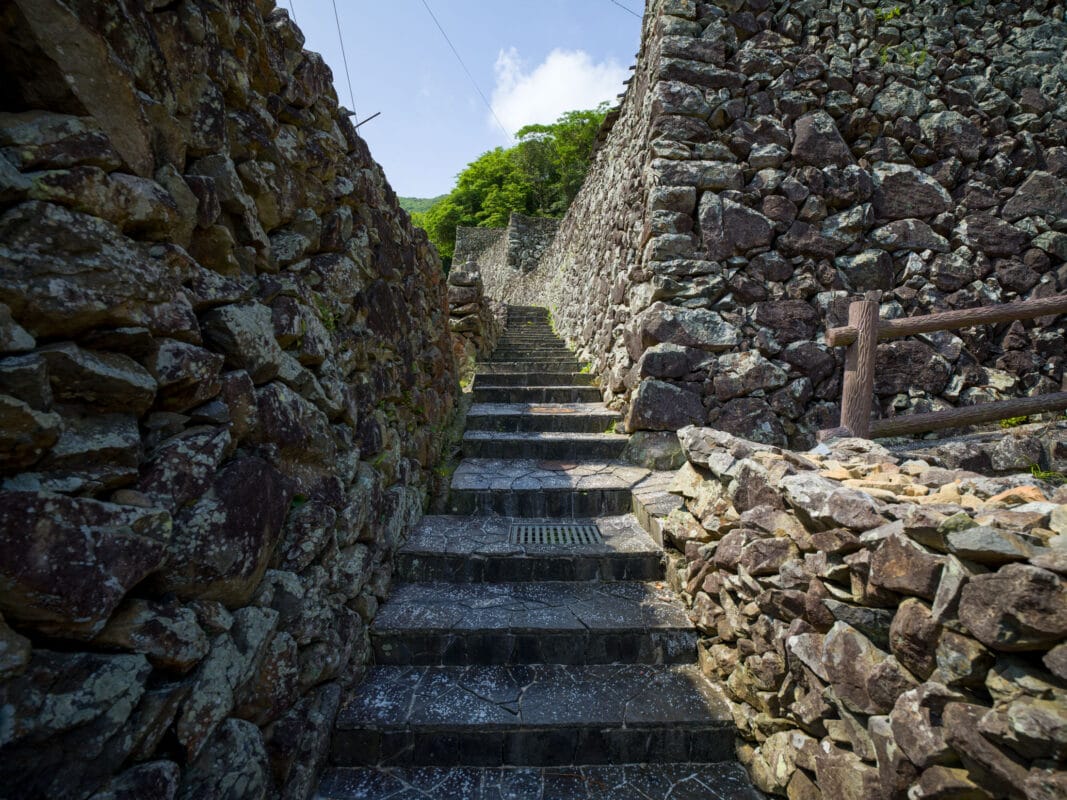

The village was established in a cove at the western end of Sakai peninsula, on a steep slope overlooking Uchiumi Sea. To protect the houses from seasonal monsoons and typhoons, they were surrounded by high stone walls, similar to castle ramparts.


Fishing was the village’s main resource at the time. The men went to sea and the women stayed home. This is how the kitchen was installed to face the sea, with a window called “Tohmi-no-mado” (window of distant vision) so that the women at their stoves could watch the fishing boats of their husbands at sea.


Picturesque winding alleys
The population has gradually fallen and some of the houses have disappeared, but the stone walls are intact. The village remains a tourist stopover, especially for photographers who appreciate the atypical setting of its narrow alleys and high walls.

To celebrate the Hina Matsuri (Doll Festival) each year, village children paint colourful pebbles as traditional hina dolls and show them at the Dandan Hina Matsuri. Some of these artworks can be seen throughout the year.


Above the village is the Dandan-kan, a relaxing place for visitors that offers some local specialities along with a panorama of sea and village below.


Not far from Sotodomari lies the southernmost point of Seto Inland Sea, Cape Takamo, a viewpoint famed for its splendid sunsets.

Also worth seeing: another picturesque port of the Seto Inland Sea, Tomonoura, the village of Ponyo.

 Instagram


