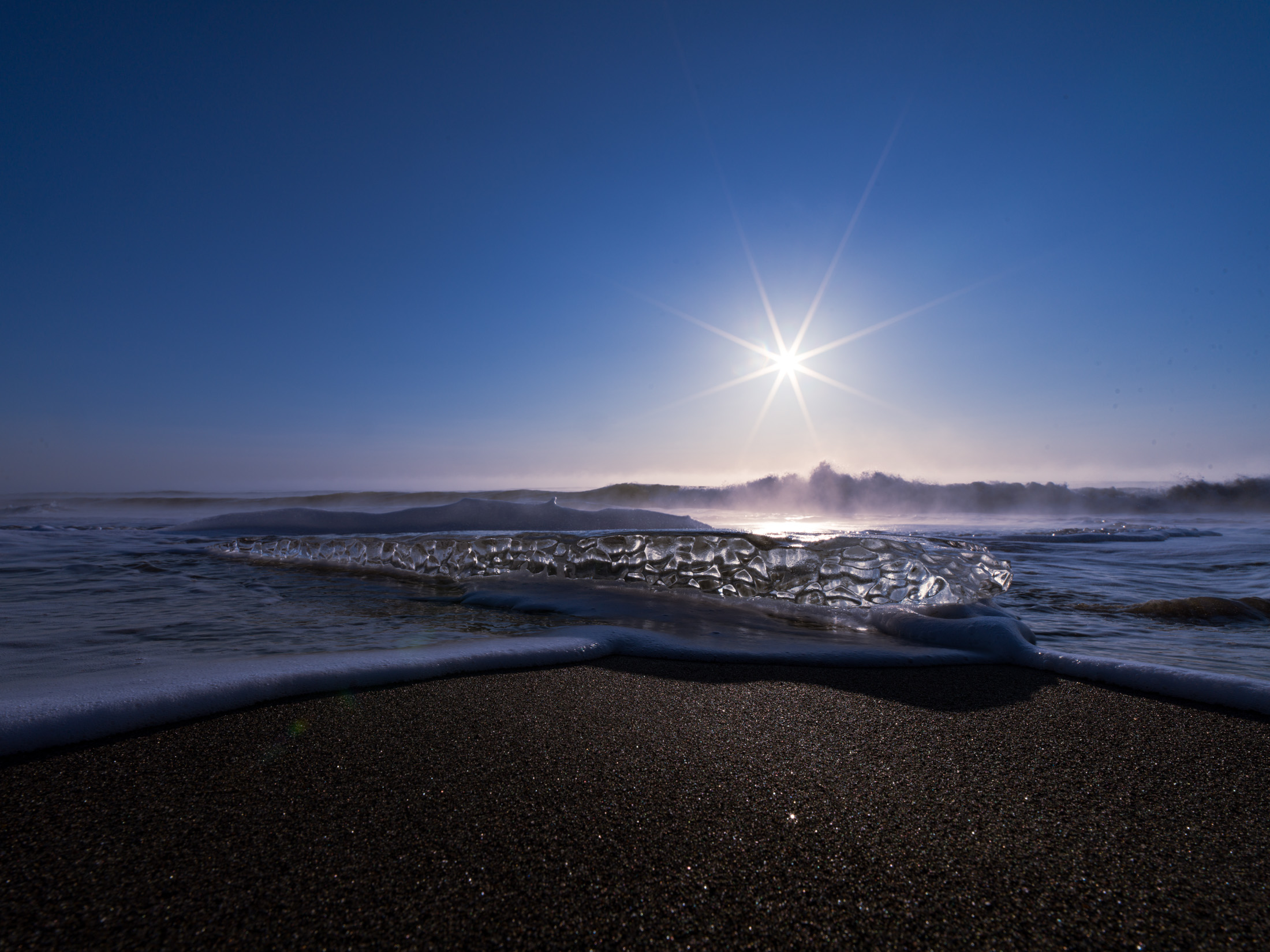
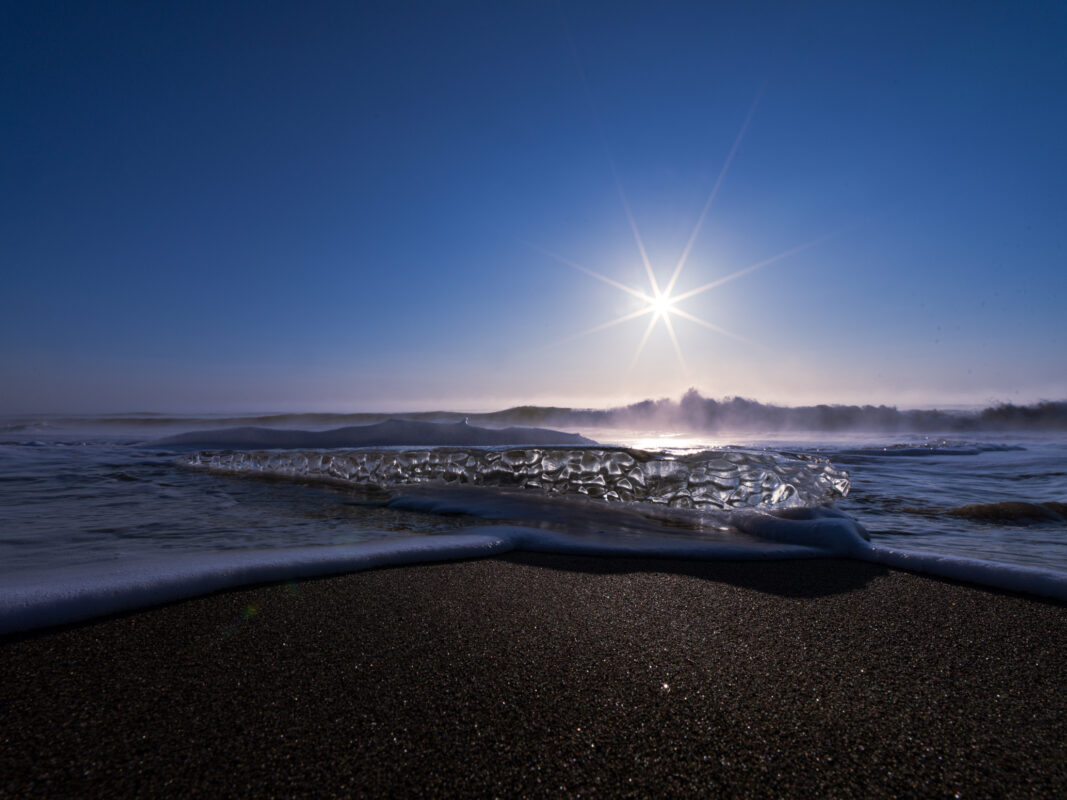
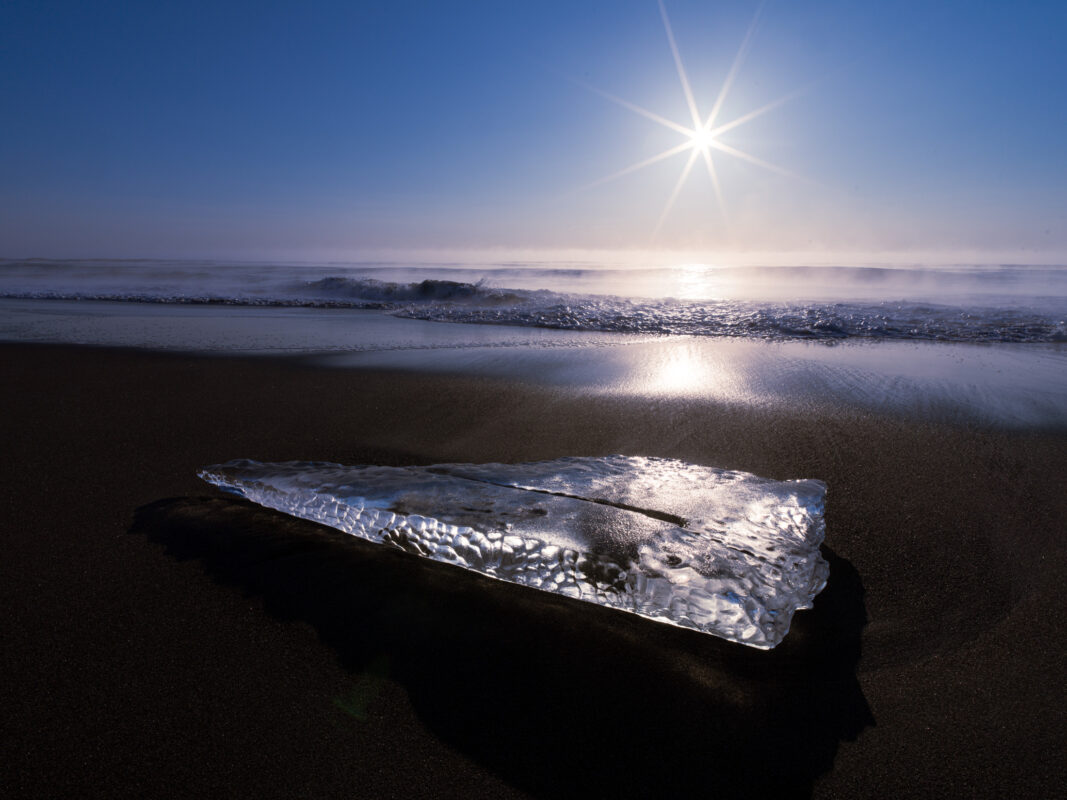
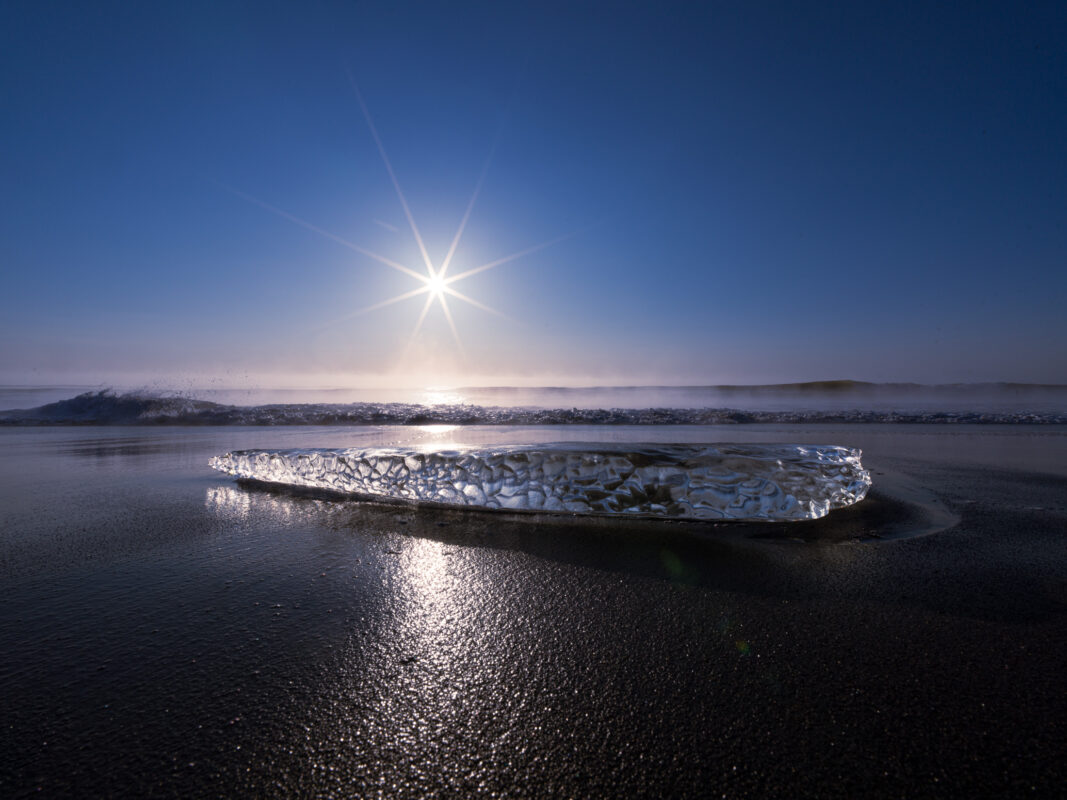
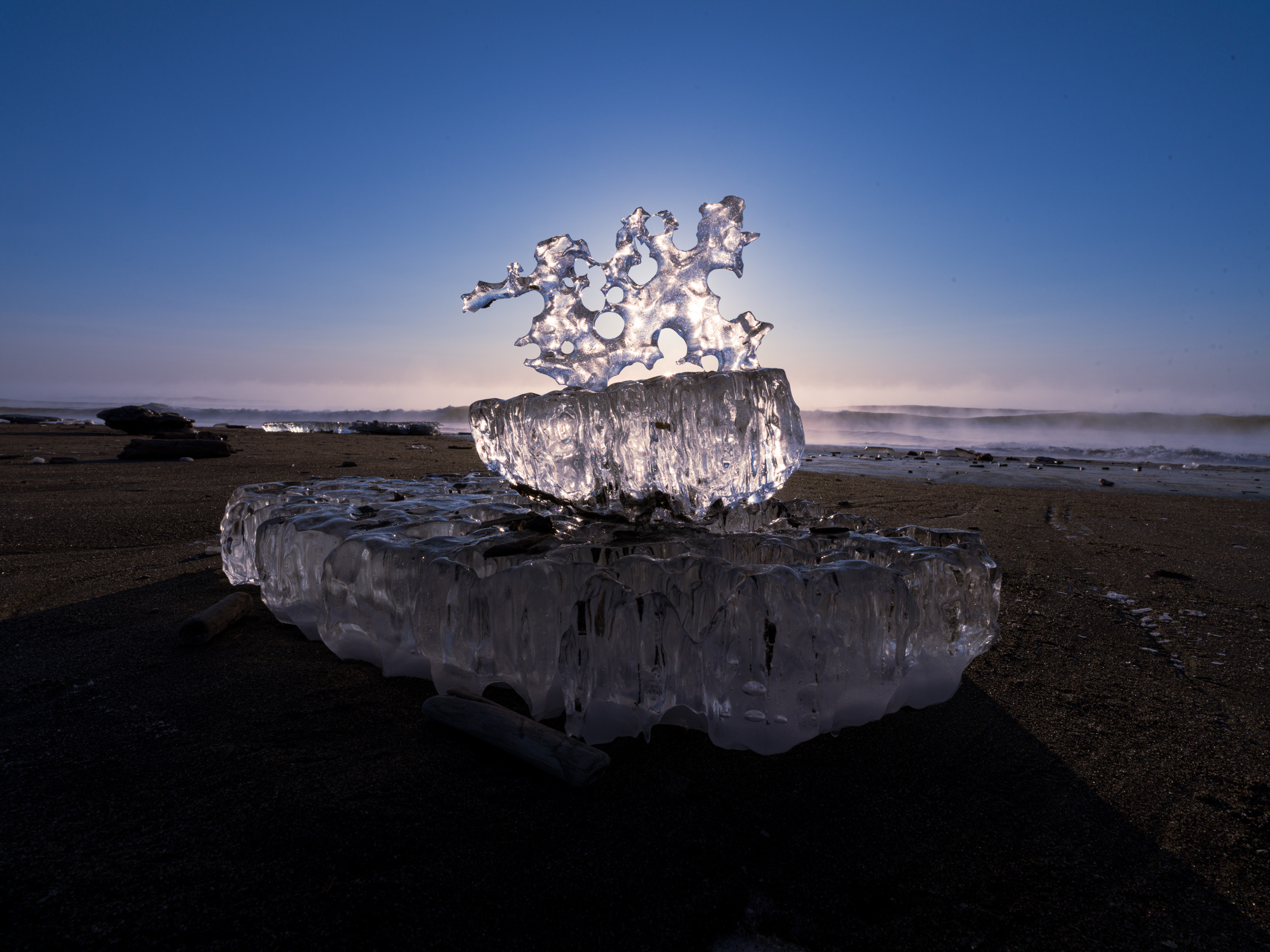
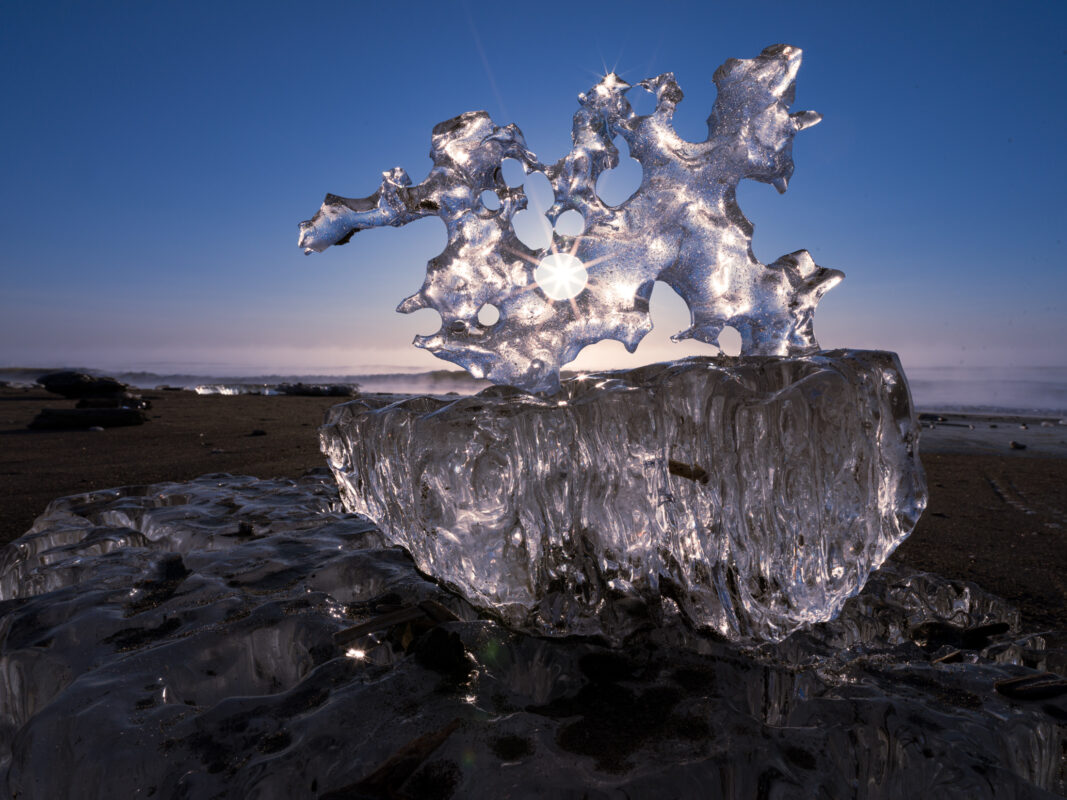
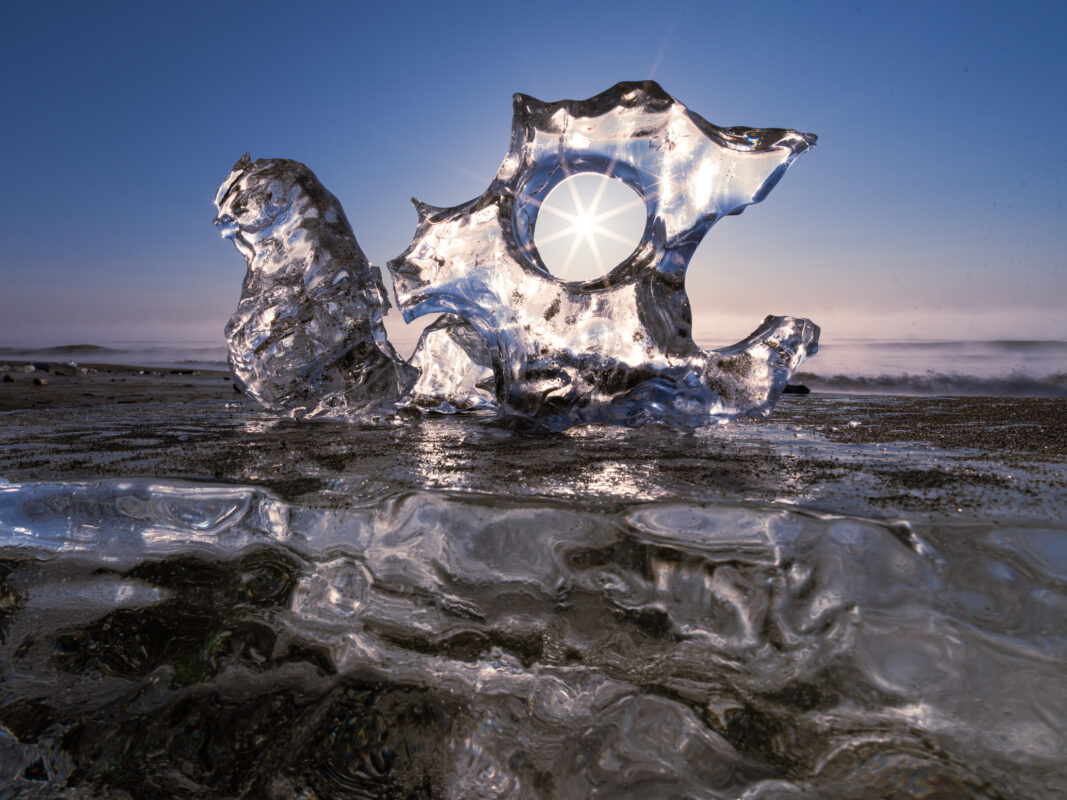
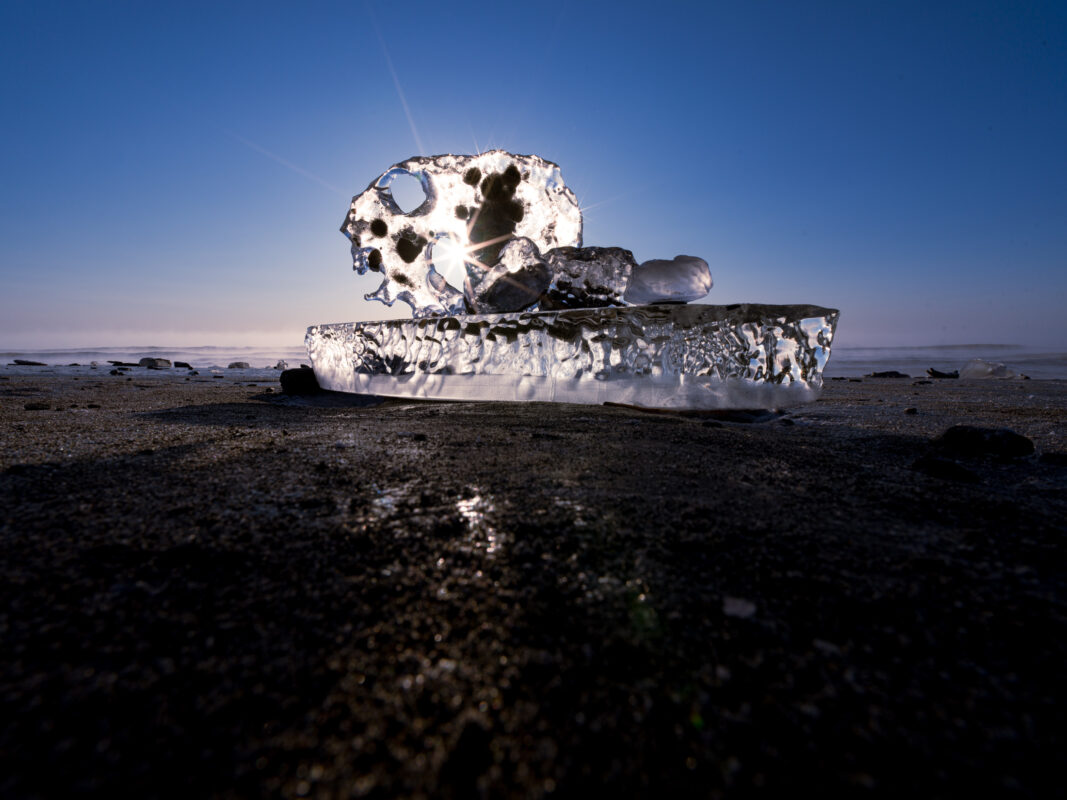
Jewelry Ice is a completely unique phenomenon that can be observed on Otsu Beach in Hokkaido. In winter, the Tokachi River, which flows near this fishing village, freezes under the region’s extremely cold temperatures.
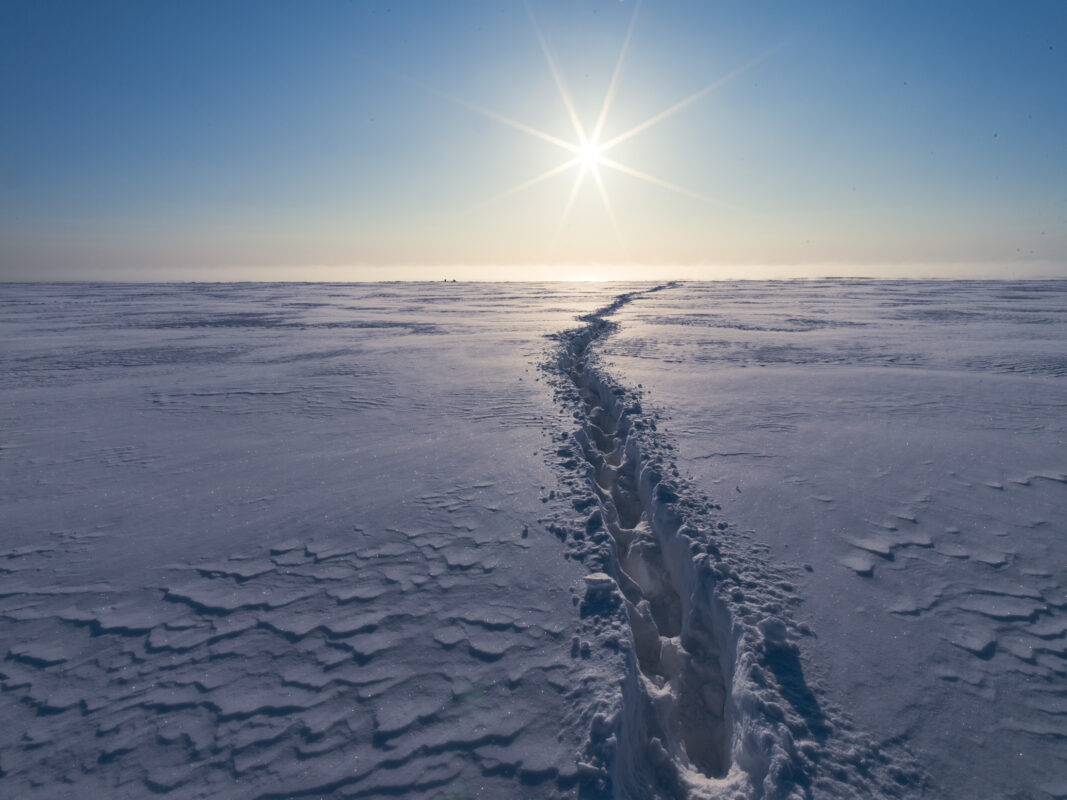
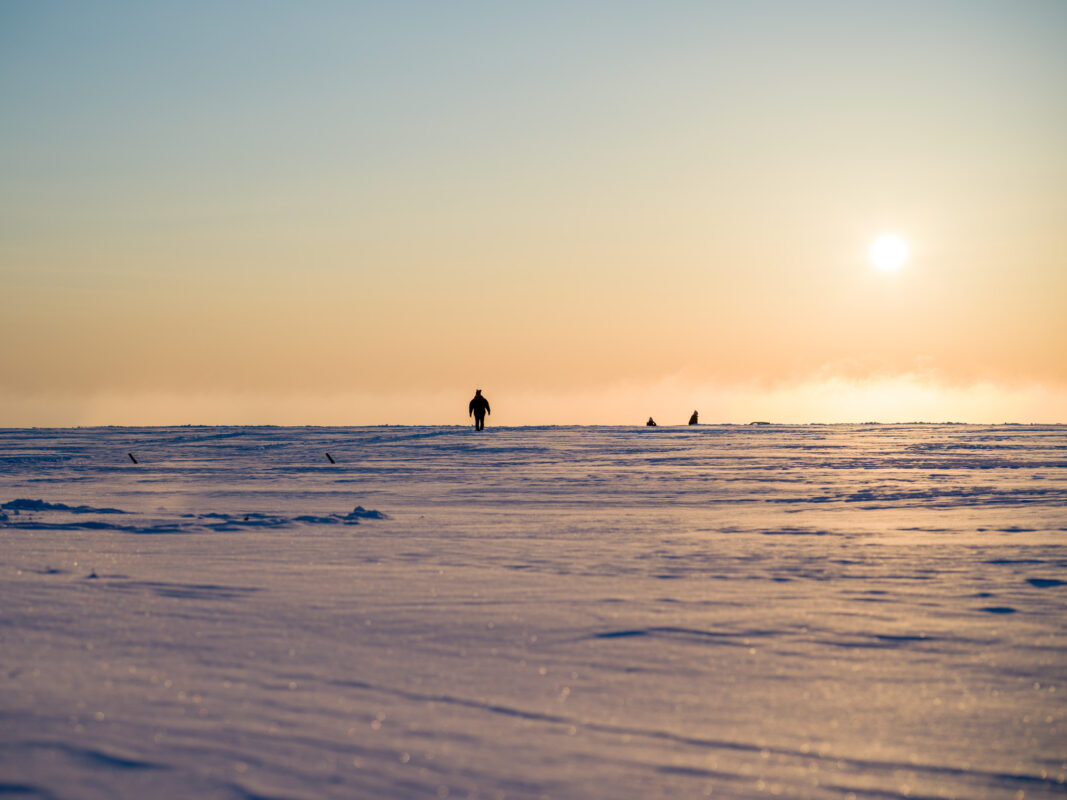
The ice drifting toward the Pacific Ocean is then deposited by the waves onto Otsu Beach. The polished blocks accumulate there and eventually blend with the sand as they melt, creating this mysterious frozen landscape.
“Jewelry Ice” isn’t a scientific term – it was coined by Mr. Hisashi Urashima in 2015. This amateur photographer is a local resident who runs an English school. He chose this nickname in reference to the purity of the transparent reflections, which give the ice the appearance of gemstone crystals.
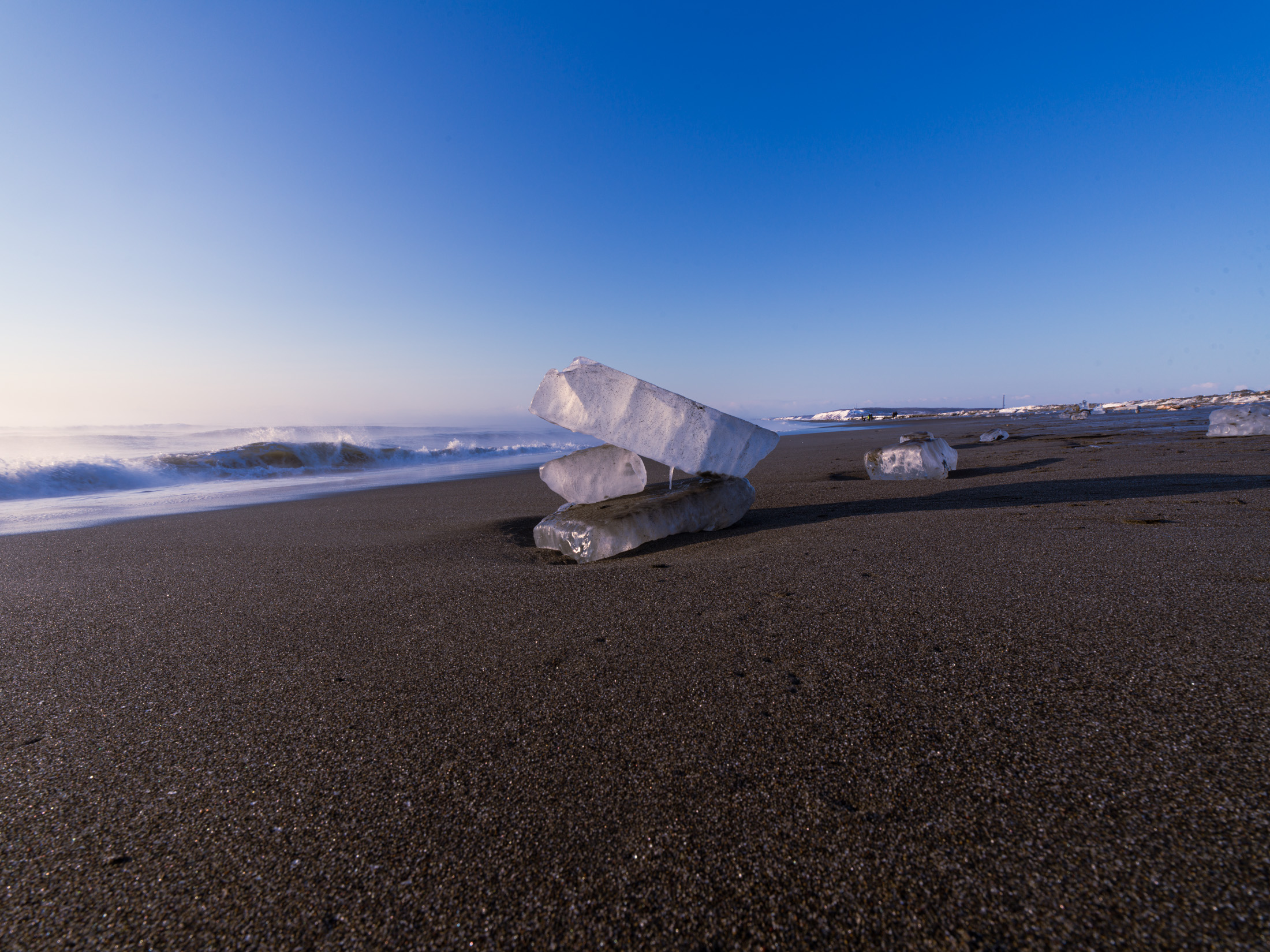
The colour of the reflections changes throughout the day depending on the sunlight. Photographers’ favourite moment is dawn, when the ice blocks, which were blue under moonlight, gradually shift from vermillion to orange. During the day, they can appear blue, sapphire, topaz, or opal, depending on the sky.
This phenomenon is only visible from mid-January to late February, when Hokkaido is at its coldest. Be well prepared before visiting, as temperatures can drop below -20°C at this time of year, especially if you go early in the morning.
Previously, this place was known only to photography enthusiasts, but it has been popularized on social media in recent years. It was even featured in the New York Times in 2017. Since then, every winter, numerous tourists and photographers flock there to capture this sparkling spectacle before it melts away.
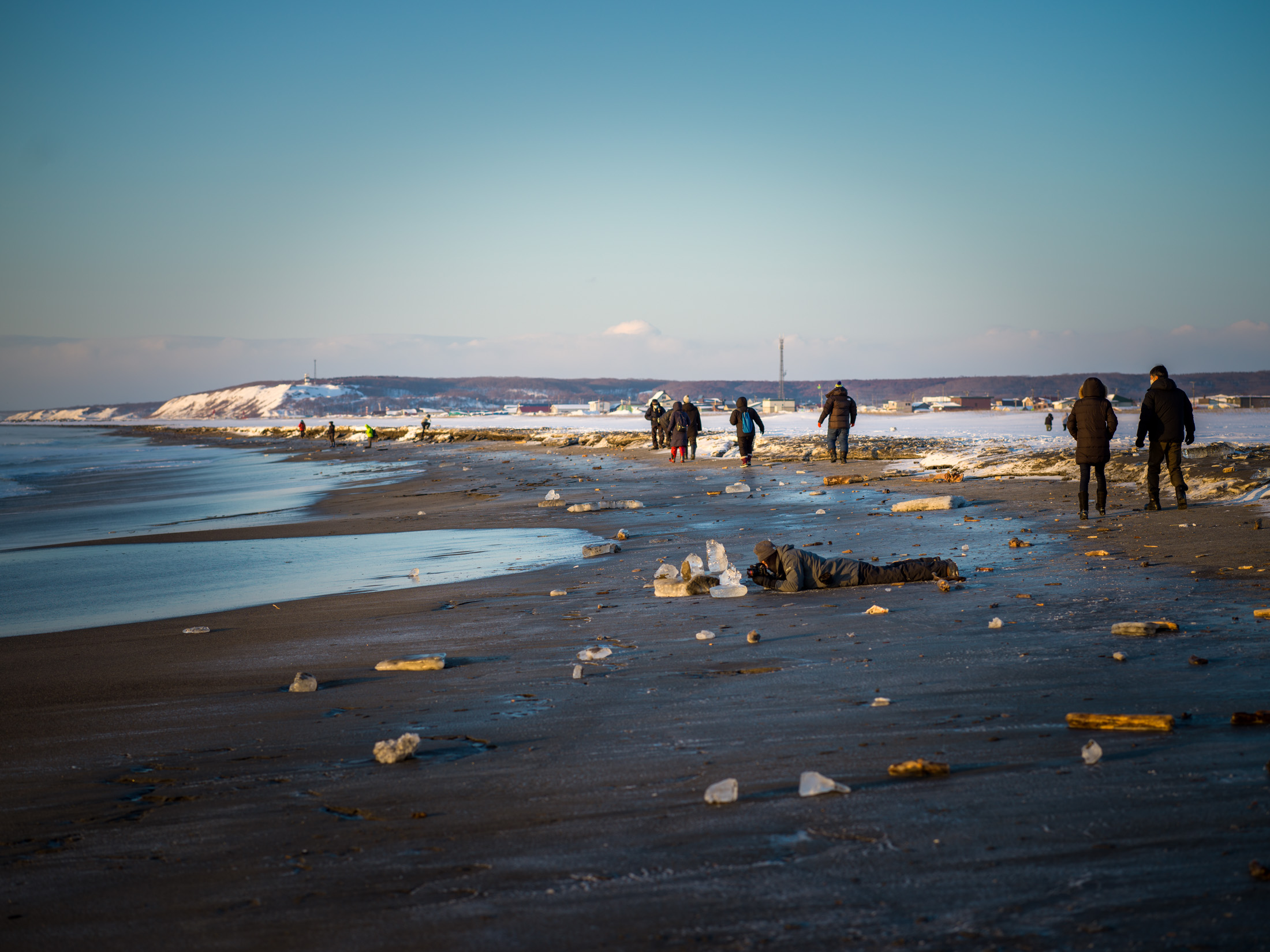
The town of Toyokoro seized the opportunity to develop its tourism activities and even built a rest and reception area for visitors in 2018, called the Jewelry House. Unfortunately, during the winter of 2021, the icy phenomenon could not be observed as usual on Otsu Beach.
According to Yasuhiro Yoshikawa, a researcher who has been studying this phenomenon since 2017, temperatures and wind direction probably shifted the ice to another beach a few kilometres away, on the other side of the Tokachi River.